

Pyrogen Testing
Home » Services » Microbiology Testing » Pyrogen Testing
Understand the pyrogen risks relevant to your pharmaceutical, medical device or combination product. Our scientists support bacterial endotoxin testing and broader pyrogen detection, helping you establish suitable methods and generate data for development and routine release decisions.
Understand what your product needs
Pyrogens are substances that can trigger fever and inflammatory responses. Bacterial endotoxins are one important group, but other pyrogens may also need to be considered.
The appropriate testing approach depends on your product, manufacturing process, intended use and applicable requirements. Understanding these factors helps determine whether endotoxin testing is sufficient or broader pyrogen detection is needed.
Endotoxin and pyrogen testing for your project
Bacterial endotoxin testing (BET)
Assess contamination from Gram-negative bacterial endotoxins using established Limulus amoebocyte lysate (LAL) methods. Relevant applications include injectable medicines, pharmaceutical waters and medical devices requiring endotoxin assessment.
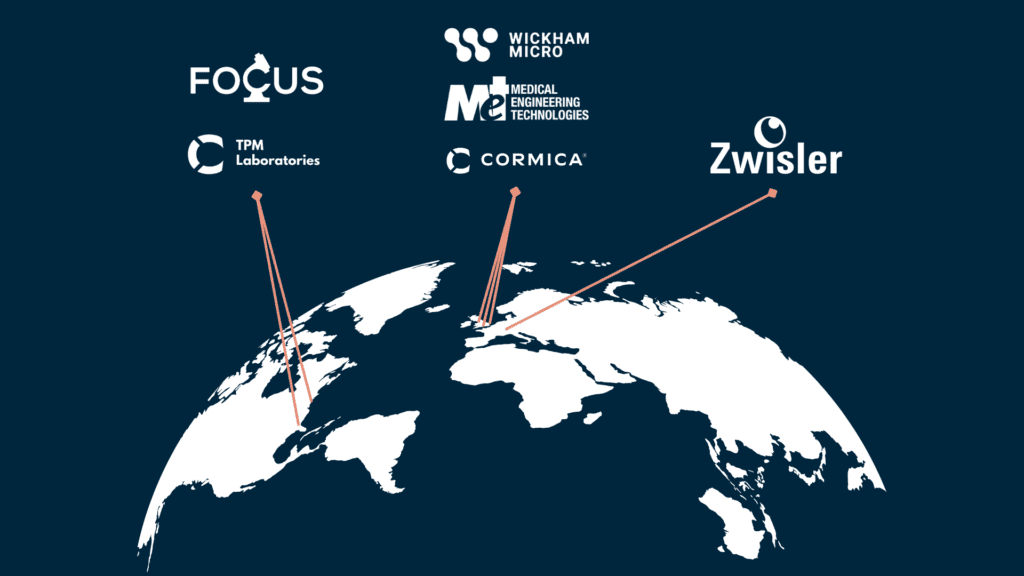
BET is available through Wickham Micro in the UK and Zwisler Laboratorium in Germany. Methods available across Cormica include kinetic turbidimetric, kinetic chromogenic and gel-clot testing.
Recombinant endotoxin testing is also available through Wickham Micro. Our team can discuss its suitability for your product and testing requirements.
Monocyte Activation Test (MAT)
Where your assessment needs to address both endotoxin and non-endotoxin pyrogens, MAT uses human immune cells to detect a pyrogenic response.
Testing is performed at Zwisler Laboratorium, Cormica’s EU laboratory in Reichenau, Germany. Support includes feasibility assessments, method development, product-specific validation and routine batch testing, with MAT studies conducted in accordance with European Pharmacopoeia chapter 2.6.30.
Establish a method that works with your product
A suitable method must account for how your product behaves during testing. Formulation ingredients, sample preparation and other product characteristics can affect the assay, making method suitability an important step before routine testing begins.
Our scientists can support:
- Feasibility and method development: establish an approach appropriate to your product.
- Method suitability and validation: assess interference and demonstrate that the method can be used for its intended purpose.
- Routine testing: apply the agreed method to support ongoing product quality decisions.
Your project benefits from Zwisler’s over 25 years MAT experience and Wickham Micro’s more than 60 years of microbiology experience.
That expertise also supports practical problem-solving. Our glucan interference case study explains how the team addressed interference affecting an endotoxin assay.
For pharmaceutical release projects, discuss your GMP, pharmacopoeial and reporting requirements at the outset so the testing can be scoped for its intended use.
Laboratories near you, supporting global product success
With accredited laboratories in the UK, EU and US, we support pharmaceutical, medical device and combination product manufacturers worldwide. Local support combined with global quality, delivered by teams who understand your regulatory requirements.
Our Clients’ Experiences