







Testing Guidance for 503A and 503B Compounding Pharmacies
Strengthening FDA Inspection Readiness for 503A and 503B Facilities
Analytical and microbiological testing plays a critical role in demonstrating the quality, safety and consistency of compounded drug products. However, FDA inspections continue to identify weaknesses in areas such as potency testing, analytical method validation, sterility testing, bacterial endotoxin testing, stability studies and environmental monitoring. These gaps can undermine batch-release decisions, beyond-use date assignments and the scientific defensibility of the wider quality programme.
Download the full article, Closing the Testing Gap: An Analytical and Microbiological Framework for FDA-Compliant 503A and 503B Compounding Pharmacies, written by scientists at Cormica TPM and originally published in the American Journal of Analytical Chemistry. This technical article examines six testing domains commonly explored during FDA inspections of 503A compounding pharmacies and 503B outsourcing facilities. It outlines typical investigator lines of enquiry, frequently observed failure modes and practical considerations for building testing programmes that are scientifically robust, appropriately documented and inspection-ready.
The article covers matrix-specific potency and identity methods, qualification of reference standards, USP <71> sterility testing, USP <85> bacterial endotoxin testing, analytical method validation in line with ICH Q2(R2), stability-indicating methods, beyond-use date justification and environmental monitoring data management. It also explains the differing expectations for 503A and 503B organisations, including the more extensive cGMP obligations applicable to registered 503B outsourcing facilities.
For compounding pharmacies, outsourcing facilities and quality teams reviewing their current approach, the paper provides a practical framework for identifying testing gaps before they become inspection findings. Drawing on extensive pharmaceutical analytical and microbiological experience, the authors highlight how method validation audits, structured testing calendars and closer integration between laboratory data and the pharmaceutical quality system can strengthen FDA inspection readiness.
Download the full article to explore the analytical and microbiological testing considerations that can support a more defensible, compliant and patient-focused compounding programme.
Supporting Your Testing Programme
Across our global laboratory network, expert scientists support 503A and 503B organisations with many of the analytical and microbiological requirements referenced in this article. This includes potency and identity testing, analytical method development, validation and transfer, sterility testing, bacterial endotoxin testing, stability studies, container closure integrity testing, environmental monitoring support and microbial identification.
With decades of regulated testing experience and work completed for clients worldwide, our teams can help identify gaps, develop scientifically robust methods and generate the data needed to support product quality, beyond-use dating and inspection readiness.
Download:
We will email you the link to the PDF file.
Authors:
Mem Rani
Mem hold a master’s degree in Chemistry and have more than six years of pharmaceutical laboratory experience. Her expertise includes GC, HPLC, method validation, cGMP testing, data documentation, and laboratory compliance.
Mounika Duppala
Mounika Duppala is an Analytical Chemist at Cormica TPM. She holds master’s degrees in Regulatory Science and Analytical Chemistry and supports pharmaceutical testing in GMP-regulated environments.
Megha Darji
Megha Darji is an Analytical Chemist at Cormica TPM. Holding a Bachelor of Pharmacy, they support GMP pharmaceutical testing, sample management and laboratory documentation, with a strong focus on data integrity and quality.
Nansiben Patel
Nansi joined Cormica in 2025 and works as an Analytical Chemist. She holds a master’s degree in Biotechnology and has over nine years of experience in pharmaceutical testing, method development and validation.
Alyssa Ragusa joined Cormica TPM in December 2025. She holds degrees in Chemical Biology and Chemistry and is currently completing a PhD at Rowan University, with research focused on HPLC column development.
Dr Kishore Hotha is General Manager of TPM. With more than 20 years of international experience, he has supported over 100 regulatory submissions, led teams through FDA audits and authored more than 100 scientific publications.
Cormica's Webinars
Recent News
Technical Resources
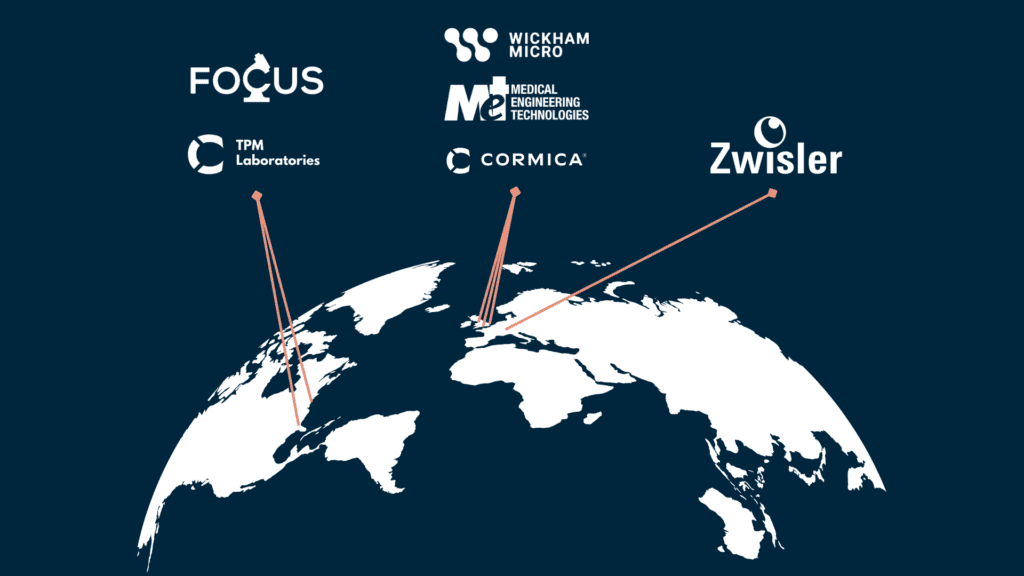
Laboratories near you, supporting global product success
With accredited laboratories in the UK, EU and US, we support pharmaceutical, medical device and combination product manufacturers worldwide. Local support combined with global quality, delivered by teams who understand your regulatory requirements.
Our Clients’ Experiences