
The use of Antimicrobial Effectiveness Testing in Pharmaceutical Microbiology

Why Antimicrobial Effectiveness Testing Matters
Ensuring the effectiveness of antimicrobial preservative systems is essential for product safety, regulatory compliance, and patient trust. Antimicrobial effectiveness testing challenges formulations under controlled conditions to confirm that microbial growth is effectively inhibited over time. Through accredited laboratories and experienced microbiology specialists, Cormica supports manufacturers with compliant testing strategies, clear data interpretation, and practical guidance to help avoid delays, rework, and unexpected regulatory findings.
Author:

Antoinae Wood
Antoinae is Lead Senior Scientist within the Validation department at Cormica’s Wickham Micro laboratory.
Share with your colleagues:
It’s August of 1970 and you have discovered a mysterious rash on your arm after applying a copious amount of your favourite moisturising cream. Being that this is your favourite cream, you only apply it on special occasions. The container has been sitting in your bathroom’s vanity cupboard for about 3 months. You noticed that the smell had soured slightly, but that didn’t deter you. Hospital testing has confirmed that you have a skin infection likely caused by a Staphylococcus spp. One month later, antimicrobial effectiveness testing first appears as a General Chapter in the United States Pharmacopoeia, 18th Edition. This testing could have prevented you from the agony experienced one month prior.
Antimicrobial preservatives can be added to aqueous pharmaceutical products during the manufacturing process to inhibit any growth from organisms that may have been introduced during production. They can also be added to multiple-dose products to inhibit growth from organisms introduced through repeated usage. There is always one or more antimicrobial preservative(s) in all sterile multiple-dose products. Without the addition of preservatives, bacterial proliferation can run rampant. Bacteria are able to grow rapidly with a high efficiency/low failure rate due to their robust cell cycle. Contamination from microorganisms can cause skin irritation (if in contact with skin; especially sensitive skin or open wounds) and other types of infection.
There are two types of preservatives that can be added to pharmaceutical products to inhibit microbial growth; antimicrobials and antioxidants. Both are used to extend the shelf life and facilitate the stability of pharmaceutical and cosmetic products, but they have distinct purposes and differences
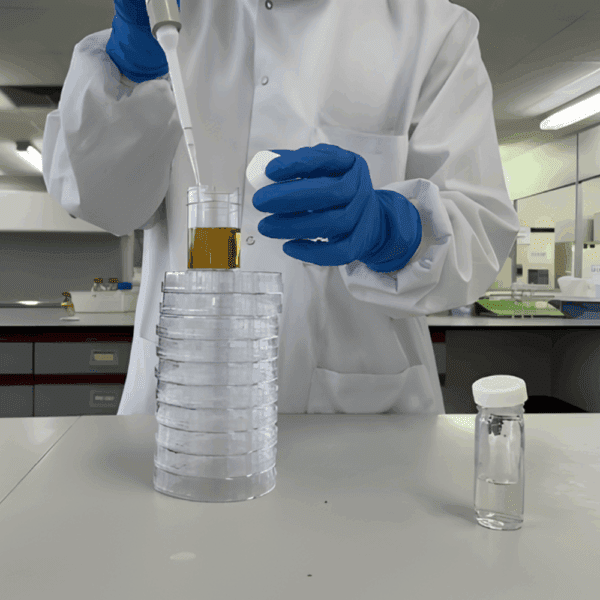
Antimicrobial preservatives are essential for preventing the growth of microorganisms in pharmaceutical products. Contamination during manufacturing or patient use can not only spoil the product but also pose significant health risks. These preservatives are particularly important in liquid (aqueous) formulations, such as eye drops, topical creams, and other water-containing products, which are more susceptible to microbial contamination. Common examples include benzalkonium chloride, widely used in eye drops; methylparaben and propylparaben, often found in topical and oral formulations; and phenol and chlorocresol, which are used in injectable medications.
Antioxidant preservatives are crucial for preventing or slowing down the oxidation of active ingredients and excipients in pharmaceuticals. Oxidation can degrade these components, reducing the product’s effectiveness and potentially producing harmful by-products. The harmful by-products of every antibiotic’s degradation (in relation to the product in which it is used) is, largely, not studied. Therefore the toxicity of the degradation’s by-products may not be known. Antioxidants are particularly important in products containing oils, fats, and active pharmaceutical ingredients (APIs). Common examples include ascorbic acid (Vitamin C), frequently used in aqueous and oil-based solutions; butylated hydroxyanisole (BHA) and butylated hydroxytoluene (BHT), typically found in lipid-based formulations like oil-based skincare, for example; and sodium metabisulfite, which is often used in injectable medications.
The key differences between antimicrobial and antioxidant preservatives lie in their functions, targets, and applications. Antimicrobial preservatives are designed to prevent microbial contamination, while antioxidant preservatives protect against chemical degradation caused by oxidation. Antimicrobial preservatives specifically target microorganisms, whereas antioxidants combat oxidising agents and oxidative reactions. Antimicrobial preservatives are essential in water-based formulations, which are more prone to microbial growth, while antioxidant preservatives are critical in products containing ingredients susceptible to oxidation. Both types of preservatives play a vital role in ensuring the safety and effectiveness of pharmaceutical products, each addressing different degradation processes.
The purpose of Preservative Efficacy Testing (often referred to as Antimicrobial Effectiveness Testing) is to ensure that antimicrobial/antioxidant preservatives are effective in their applications. This is done by challenging the formulation with a range of bacterial and fungal species that are commonly found in the environment. Samples are taken at individual timepoints; after which, the surviving organisms are enumerated and the values obtained are compared to a system control. A log reduction factor of the results of each enumeration is produced and analysed against the pass/fail criteria stated in the appropriate pharmacopoeia.

Pharmacopoeia are responsible for determining which organisms are required for each formulation. For example, the European Pharmacopoeia (Ph. Eur) states that Parenteral & Topical formulations must be challenged with Aspergilus brasiliensis (mould), Candida albicans (yeast), Staphylococcus aureus (Gram positive cocci), and Pseudomonas aeruginosa (Gram negative rod). Whereas, the United States Pharmacopoeia (USP) includes the addition of Escherichia coli (Gram negative rod) in most formulations. E. coli is, however, recommended by the Ph. Eur for liquid oral formulations. The pharmacopoeia also decide the time points which must be performed, depending on the sample formulation. Timepoints are the days that sampling is performed on a predetermined volume of inoculated product to analyse how much organism is remaining in the aliquots. They were designed to simulate use of the product. This type of sampling can be compared to a shelf-life study. For example, Ph. Eur have instructed that a 6 hour, 24 hour, 7 day, 14 day and 28 day time point be taken for Parenteral & Topical formulations. The theory behind this type of repeated sampling is that a qualitative result is produced which is used to analyse the effectiveness of the sample’s preservative system over a 28-day incubation period at 20-25 degrees Celsuis (or room temperature). Pharmacopoeia also provide the accepted log reductions for each formulation. Standard Operating Procedures (SOPs) are created using the instructions provided. A formulation can be considered as “passed” if it shows an acceptable log reduction.
Pharmacopoeias categorise products based on their preparation method. each category dictates the required log reduction at specified timepoints. Category 1 products are sterile parenteral products in an aqueous (liquid) form, such as injectables, eye drops, and nasal sprays. These products have stricter log reduction requirements and shorter time intervals. A 1-log reduction in microbial count must be achieved by the 7-day timepoint, with a 3-log reduction by day 14, based on initial control counts taken at day 0. Additionally, by day 28, counts must not increase from those at the 14-day timepoint.
Category 2 products, which include nonsterile topical and nasal products, require a minimum 2-log reduction by day 14, with no increase in bacterial counts at day 28. Category 3 products, consisting of oral aqueous-based products (excluding antacids), have the same requirements as Category 2, mandating a 2-log reduction by day 14 and no increase in counts comparative to day 14 by day 28. Category 4 products, specifically aqueous-based antacids, have the least stringent requirements, needing only stability with no increase in microbial or mold counts at both 14 and 28 days.
| Category | Product Description | Criteria for Bacteria | Criteria for Yeast and Mould |
|---|---|---|---|
| 1 |
|
|
|
| 2 |
|
|
|
| 3 |
|
|
|
| 4 |
|
|
|
The preparation of the organisms, used during testing, is one of the more important aspects. Laboratories must consider organism subculturing and the number of passages when preparing organisms to be used during effectiveness testing. Continuous cell propagation can lead to altering the organism’s antimicrobial susceptibility. USP recommends using cells that are no more than five passages from the freeze-dried stock culture. Although the Ph. Eur doesn’t give a specified number of passages, it states to keep the number to a minimum. A passage is when an organism that has been cultured onto one growth medium is transferred onto another for the purpose of harvesting prior to use.
| Category 1 Products | |
| Bacteria | NLT 1.0 log reduction from the initial calculated count at 7 days, NLT 3.0 log reduction from the initial calculated count at 14 days, and no increase from the 14 days’ count at 28 days. |
| Yeast and Moulds | No increase from the initial calculated count at 7, 14, and 28 days. |
| Category 2 Products | |
| Bacteria | NLT 2.0 log reduction from the initial calculated count at 14 days, and no increase from the 14 days’ count at 28 days. |
| Yeast and Moulds | No increase from the initial calculated count at 14 and 28 days. |
| Category 3 Products | |
| Bacteria | NLT 1.0 log reduction from the initial calculated count at 14 days, and no increase from the 14 days’ count at 28 days. |
| Yeast and Moulds | No increase from the initial calculated count at 14 and 28 days. |
| Category 4 Products | |
| Bacteria, Yeast, and Moulds | No increase from the initial calculated count at 14 and 28 days. |
Both pharmacopoeia also dictate the incubation conditions, respective to the organism type. Bacteria are to be grown at 30-35 degrees Celsius for 18-24 hours on a Soybean-Casein Agar, like Tryptone-Soya Agar (TSA). This is so that the organisms are harvested while in the log phase; the nutrients in the agar are preferable to bacteria. This ensures that the most viable cells are harvested and used during testing as possible. Although harvesting equipment like the spectrophotometer are used, these tend to measure an approximate suspension concentration through light absorption. It is not possible to determine the viability of the cells using these methods. Yeasts and moulds are both grown on Sabouraud Dextrose Agar (SDA) and incubated at 20-25 degrees Celsius. Antibiotics like chloramphenicol are used in SDA to limit the growth of bacterial species. 20-25 degrees is a suboptimal temperature for the growth of yeasts so the incubation is typically 40-48 hours; and should not exceed 52 hours. Mould spores are used during effectiveness testing so Aspergillus brasiliensis is given 6-10 days of incubation so that a prolific lawn of black spores are visible and harvested.
The Handbook of Pharmaceutical Excipients details a large variety of excipients used in pharmaceutical products including antimicrobial preservatives. See table 2 for a short synopsis of the typical properties of some commonly used antimicrobial preservatives.
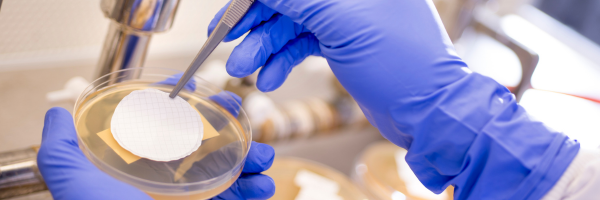
Table 2. Antimicrobial Properties of Commonly Used Antimicrobial Preservatives
As described in The Handbook of Pharmaceutical Excipients
| Cetrimide (quaternary ammonium compound used in ophthalmic and topical products) | “…good bactericidal activity against Gram-positive species but is less active against Gram-negative species. Pseudomonas species, particularly Pseudomonas aeruginosa, may exhibit resistance.” |
| Propylparaben (“widely used” antimicrobial preservative in injectable, topical, and oral products) | “…more active against yeasts and molds than against bacteria. They are also more active against Gram-positive than against Gram-negative bacteria.” |
| Benzyl alcohol (commonly used in injectable products) | Prevents the growth of bacteria without killing them. “…used as an antimicrobial preservative against Gram-positive bacteria, molds, fungi, and yeasts, although it possesses only modest bactericidal properties.” |
Without the introduction of this testing, there would be no way to ensure that the preservatives used are effective at inhibiting the growth of contaminating organisms. Each time you open your favourite container of hand cream or your bottle of cold and flu medicine, be confident that the antimicrobial preservative testing that was performed has ensured that the product has an appropriate shelf life for its intended use. Note that this test does not guarantee that a product is completely safe from antibiotic resistant organism strains, as these are not commonly tested.
Confident preservative efficacy, backed by compliant testing
Cormica supports pharmaceutical and combination-product manufacturers with antimicrobial effectiveness testing aligned to USP, Ph. Eur., and global pharmacopoeial requirements. Our microbiology specialists help you demonstrate preservative performance, reduce contamination risk, and generate data that supports confident product release.
Other Cormica News, Events & Resources
Cormica's Webinars
Recent News
Technical Resources
Laboratories near you, supporting global product success
With accredited laboratories in the UK, EU and US, we support pharmaceutical, medical device and combination product manufacturers worldwide. Local support combined with global quality, delivered by teams who understand your regulatory requirements.

Our Clients’ Experiences