




Cormica's Reflections from the 2026 SAE Pre-Filled Syringe Conference
The SAE Pre-Filled Syringe Conference brought together device manufacturers, pharmaceutical companies, regulators, and technical specialists to focus on the continued evolution of pre-filled syringe and injectable devices development.
Cormica was represented by Hollie Gladwin and Rebecca Easterby, who attended technical and regulatory sessions, spoke with manufacturers across the supply chain, and shared practical insight into how expectations around syringe performance, robustness, and justification are continuing to develop. What stood out was a clear sharpening of focus around transport simulation, risk-based testing strategies, and the need for more tailored, investigation-driven studies.
Transport simulation and syringe robustness
Air transit simulation featured strongly throughout the technical discussions, particularly around plunger stopper behaviour under pressure changes during air transport. With air transit considerations now being referenced more explicitly within standards such as ISO 11040-8, this area is gaining increased regulatory visibility. We’ve published a dedicated poster on this topic offering deeper insights here.
What stood out was not debate over whether air transit testing is needed, but a deeper focus on how it is performed. Delegates discussed the importance of representative pressure profiles, temperature conditioning, and test configurations that reflect realistic distribution scenarios rather than idealised conditions.
For clients, this reinforces the need to think carefully about how syringe systems behave beyond the laboratory. Subtle changes in plunger movement, stopper position, or internal pressure can influence dose delivery and overall system performance. Designing transport simulation studies that genuinely challenge the device helps identify risks early and provides stronger technical justification within regulatory submissions.
Authors:
Hollie Gladwin
Hollie Gladwin has over a decade of experience in science and healthcare, specialising in closed container integrity testing and the use of advanced testing apparatus. she applies her expertise with precision and a focus on delivering reliable, high-quality results at Cormica MET.
Rebecca Easterby
With a background in Forensic Science, Rebecca started her career in analytical laboratory testing before moving into a physical testing role at Cormica MET. Rebecca now supports clients within the sales team, bringing her technical laboratory experience into a client-facing role and helping ensure testing programmes are both practical and aligned with regulatory expectations.
Share with your colleagues:
Risk management and essential device performance
Risk management was another consistent theme, particularly the identification and verification of essential drug delivery outputs. While terminology continues to be refined across guidance documents, the intent is clear: manufacturers must demonstrate that the functions critical to safety and performance are properly understood and robustly verified.
For pre-filled syringes, this typically includes attributes such as dose accuracy, injection force, cap removal force, and mechanical reliability. Several sessions highlighted the growing expectation that test sample sizes and acceptance criteria should be clearly justified through risk assessment, rather than based on legacy approaches.
This mirrors what we see in day-to-day client discussions. Regulators are increasingly interested in understanding why specific tests were selected, how they relate to intended use, and how the resulting data supports confidence in the device. Well-structured, risk-based testing programmes remain central to achieving this. See our pre-filled syringe testing to regulatory standards here.
When standard methods do not tell the full story
A recurring point of discussion was the need for bespoke and investigation-driven testing, particularly for novel syringe designs, platform adaptations, or products moving into new therapeutic areas.
Several delegates shared examples where standard test methods alone were not sufficient to answer specific performance questions. In these cases, customised fixtures, bespoke tooling, or adapted protocols were needed to better replicate real-world stresses or explore potential failure modes.
This reflects a broader shift across the industry. As devices become more complex and more closely integrated with the drug product, manufacturers are increasingly looking for testing partners who can go beyond published standards and design studies that generate meaningful, decision-ready data.
See how a bespoke approach to NHS standard rotational dye ingress testing helped overcome method limitations and deliver clear, defensible packaging integrity data in this case study.
A joined-up view of the product lifecycle
Across technical presentations and informal conversations, there was strong recognition that effective pre-filled syringe development depends on a joined-up understanding of the full product lifecycle. Choices made at the component or materials stage can directly affect transport performance, usability, and the strength of regulatory justification later.
For clients, this highlights the value of working with testing partners who understand not only how to run individual tests, but how those results fit into the wider regulatory and development picture.
“What really stood out at SAE was the shift towards understanding real-world performance, not just running standard tests because they’ve always been done. The conversations reflected what we’re already seeing with clients, where risk-led testing and bespoke studies are key to building confidence in pre-filled syringe performance.”
Hollie Gladwin
What this means for clients
For manufacturers developing or maintaining pre-filled syringe and injectable devices, the key takeaways from SAE are clear:
- Transport and distribution behaviour is receiving increased regulatory attention and should be considered early in development.
- Risk-based justification of testing strategies is becoming more important than ever.
- Standard methods remain essential, but are often most powerful when supported by bespoke, investigation-driven studies.
- A lifecycle-focused approach helps reduce uncertainty and supports smoother regulatory submissions.
Cormica supports clients across all of these areas, combining decades of experience, expert scientists, and integrated testing capabilities to help generate data that is technically sound, regulator-ready, and genuinely useful for decision-making.
Attending industry conferences such as SAE ensures we stay closely aligned with the challenges our clients face and continue strengthening the support we provide as expectations evolve. See more exhibitions we are attending in 2026.
Other Cormica News, Events & Resources
Cormica's Webinars
Recent News
Technical Resources
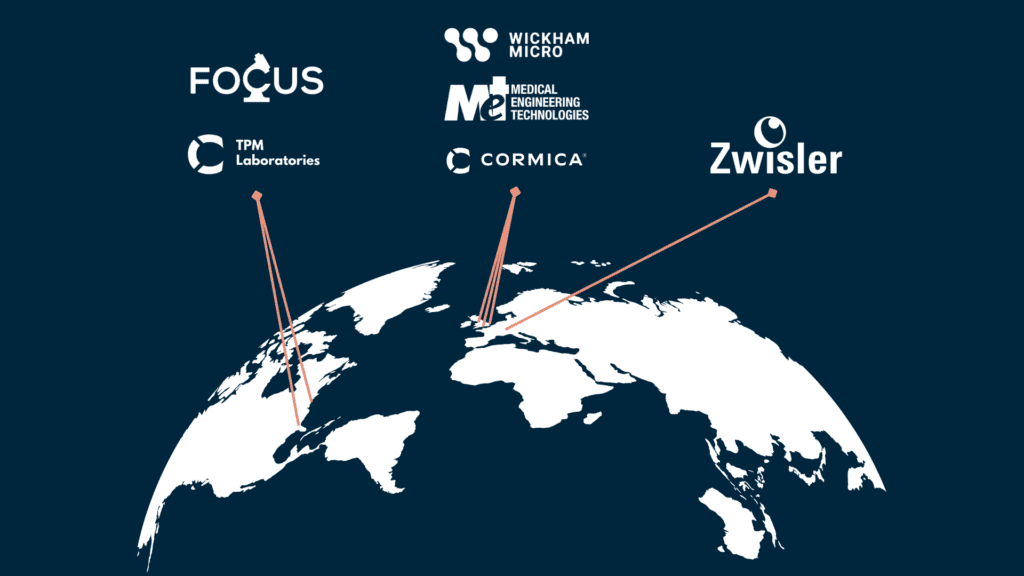
Laboratories near you, supporting global product success
With accredited laboratories in the UK, EU and US, we support pharmaceutical, medical device and combination product manufacturers worldwide. Local support combined with global quality, delivered by teams who understand your regulatory requirements.
Our Clients’ Experiences